YOUR LANGUAGE. THEIR LANGUAGE. A SHARED CONVERSATION.
Speak naturally.
Make room for understanding.
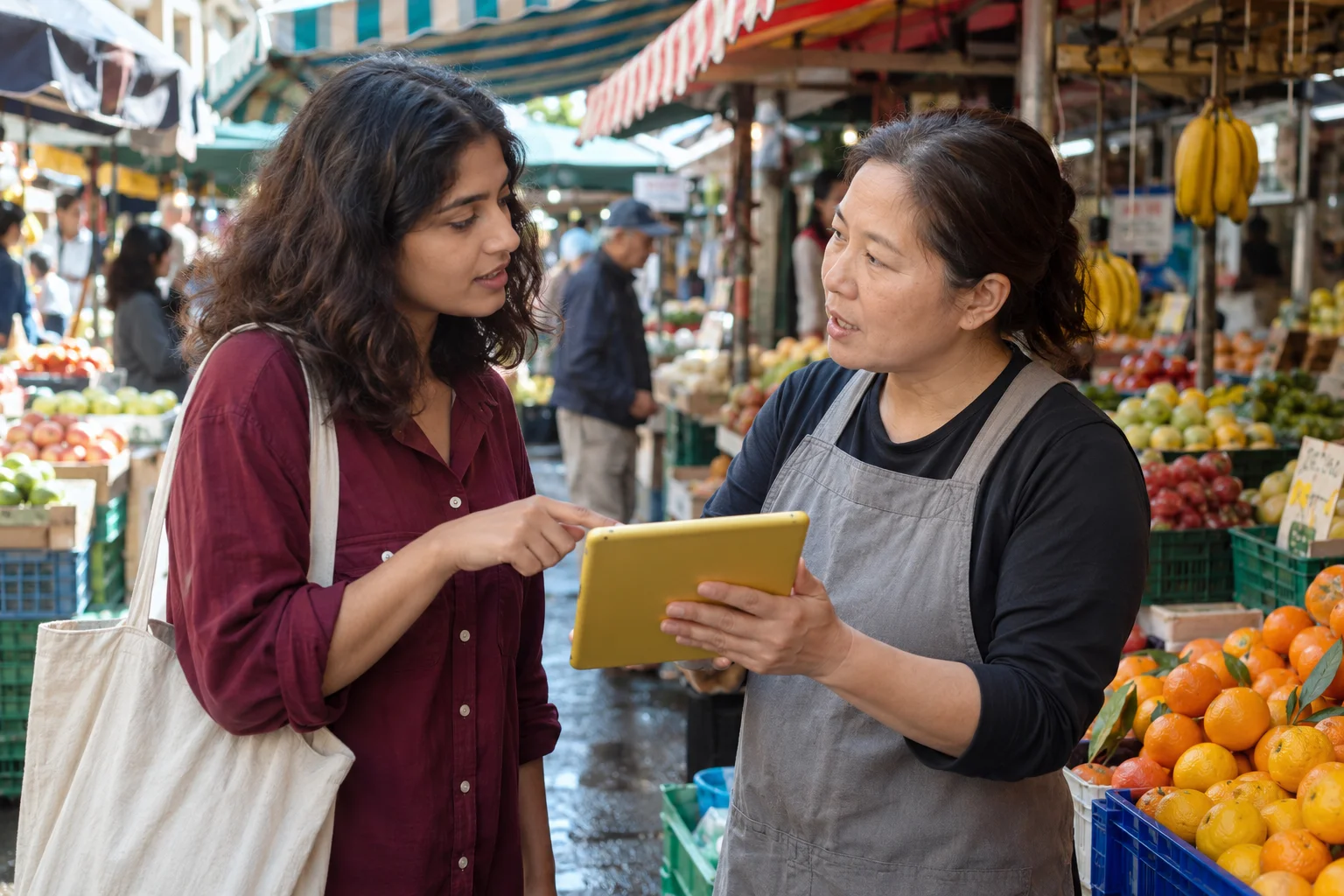
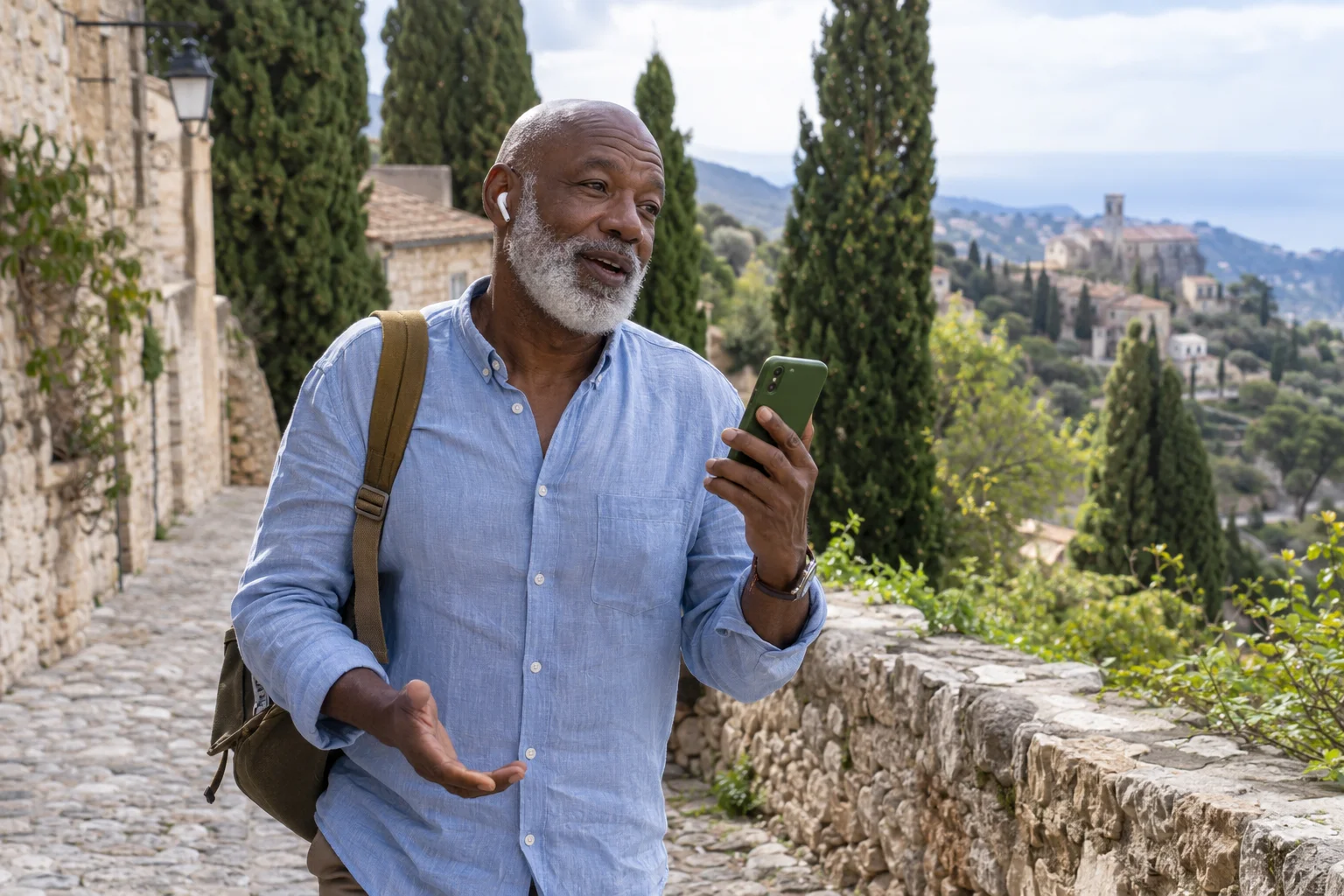
Arleyo brings speech recognition, translation and spoken output into a two-way conversation. You speak in your language; the other person hears translated speech in theirs. Their reply comes back translated for you.
It’s good to talk to you.
Me alegra hablar contigo.
WHAT HAPPENS BETWEEN SPEAKING AND HEARING
A bridge, built one turn at a time.
Translation has several steps. Knowing what happens helps you leave a little space for the other person’s words to arrive.
Speech becomes text
Speech recognition processes what you say. Background noise, overlapping voices and unfamiliar names can affect what is recognised.
Meaning crosses languages
The recognised words are translated into the selected language. A translation may need clarification, especially for numbers, names or specialised terms.
The other person hears it
Translated speech is played in their chosen language. Their replies follow the same process in the other direction.

HELP EACH OTHER BE UNDERSTOOD
The words matter.
So does the way you take turns.
Before a translated call, agree on the languages you will speak and hear. That gives both people the same starting point. A contact’s preferred language is useful context, but you still need to confirm the actual pair and mode.
When a reply takes a moment, leave room for processing instead of speaking over it. Listen to the translated speech and use the original and translated subtitles as another way to follow the exchange. If a name or number looks wrong in the recognised text, repeat it clearly rather than building the next part of the conversation around it.
For an arrangement, ask the other person to repeat the important detail in their own words. This is practical conversation guidance, not a guarantee that the system will detect every mistake. The aim is to give both people an opportunity to clarify.
Before choosing optional saving, decide what you will need after the call. A live subtitle helps in the moment; a transcript gives you a locally saved text copy as a separately charged option. Local saving can still involve service processing, and it does not make the translated audio true end-to-end encryption.
You can turn translation on or off using the call controls. Direct audio carries speech without the translation step; it should not be confused with a different way to translate an unavailable language pair.
Choose your audio mode ↗ANOTHER WAY TO FOLLOW ALONG
Read the words.
Stay with the conversation.
Live subtitles show original and translated text. You can use the original text to check what was recognised and the translated text to follow the meaning.
Live subtitles are different from optional saved transcripts. Seeing text during a call does not mean a transcript is automatically saved.
Understand transcript choices ↗Your voice, with personalisation
Voice Preserve is intended to retain voice characteristics in voice personalisation. It does not promise a particular level of similarity, naturalness or translation quality.
Translation and voice personalisation are separate from the need to confirm important details with the other person.
A LITTLE PATIENCE HELPS
Useful translation.
Honest expectations.
Live translation introduces processing delay and can make mistakes. Speak clearly, avoid talking over each other and pause when a detail needs checking.
Arleyo supports English, Spanish, French, German, Portuguese, Italian, Dutch, Russian, Hindi and Japanese. Select each person’s language from the options for your conversation mode.
Explore supported languages ↗- Noise and overlapping speech
- A quieter setting and one speaker at a time make speech easier to recognise. In translated audio groups, one active speaker speaks at a time.
- Names, dates and numbers
- Repeat or confirm them. Reading a subtitle can help you spot a difference, but it is not a guarantee of accuracy.
- Specialised or consequential conversations
- Confirm critical details and use a qualified interpreter when the stakes require it. Arleyo does not replace certified specialist interpretation.
KNOW HOW THE AUDIO IS HANDLED
Processed speech.
Encrypted transport.
Translated audio involves server processing. Encrypted transport does not make server-translated audio true end-to-end encryption.
Translation processing is temporary by default, with no default audio archive. Optional local saving is a separate choice and can still involve service processing.
Read about processing & privacy ↗